Request a Demo Back

Growth Can Hide Weakness

margin protection in travel

Why stronger sales no longer guarantee stronger travel businesses.

For many years, growth was seen as the clearest sign of success in travel.

More bookings.
More enquiries.
More expansion.

But recent years have exposed something many businesses are now quietly recognising.

Growth alone does not always create stability.

In some cases, it can actually hide operational weakness underneath the surface.

This is one of the reasons why margin protection in travel has become increasingly important for Finance Directors and operational leadership teams.

Because in volatile conditions, revenue alone does not guarantee stability.

Margin Protection in Travel Is Becoming Operationally Critical

Wars, tariffs, inflation and currency fluctuations continue to affect travel businesses globally.

Even strong sales periods can become operationally difficult if:

    • supplier costs shift unexpectedly
    • exchange rates move sharply
    • liabilities remain unclear
    • operational visibility arrives too late

This is why finance visibility is becoming strategically important.

Stronger Visibility Creates Better Decisions

The businesses navigating uncertainty most confidently are creating earlier understanding around:

  • supplier commitments
  • future liabilities
  • operational exposure
  • projected margin movement
  • FX control for travel companies

This is where connected operational systems become valuable.

Not as software alone.

But as operational infrastructure supporting calmer decision-making.

Discover how Sugati Travel CRM helps travel businesses improve operational visibility, financial clarity and supplier management.

Growth Still Matters. Visibility Matters More.

In unstable markets, visibility becomes a competitive advantage.

Because the businesses protecting margin consistently are often the businesses positioned strongest for future growth.

Social Proof

Operational clarity only matters if it works in real-world conditions.

Read how travel businesses are using Sugati on Salesforce AppExchange to improve visibility, workflow connection and day-to-day operational confidence.

Speak to the Sugati team about operational visibility, FX workflows and financial clarity within Sugati.

In uncertain markets, margin protection in travel is no longer simply a finance conversation.

It is becoming an operational requirement.

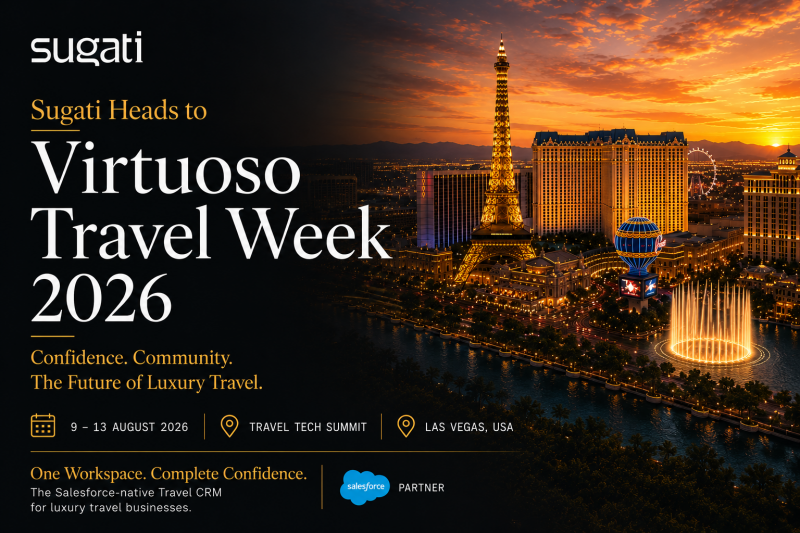
Sugati Heads to Virtuoso Travel Week 2026

Sugati Heads to Virtuoso Travel Week

Confidence. Community. The Future of Luxury Travel.

Luxury travel isn’t simply about where people go.

It’s about how they feel every step of the journey.

Clients expect experiences that feel effortless. Advisors promise journeys that are personal, seamless and unforgettable. Behind every extraordinary holiday sits an intricate network of people, suppliers and technology working together to make that promise a reality.

That is why we’re delighted to announce that Sugati will be attending Virtuoso Travel Week 2026, taking place from 9–13 August 2026 in Las Vegas, Nevada.

Throughout the week, you’ll find the Sugati team in the Travel Tech Summit, alongside fellow technology innovators supporting the world’s leading luxury travel businesses.

More importantly, we’re looking forward to meeting the advisors, tour operators, destination specialists and travel professionals who continue to shape the future of luxury travel.

Why Virtuoso Travel Week Matters

Virtuoso Travel Week is one of the most influential events in the luxury travel calendar.

Bringing together thousands of travel advisors, preferred partners, destinations and technology providers from around the world, it creates an environment where relationships are strengthened, ideas are exchanged and the future of luxury travel is discussed. It is where many of the industry’s most important conversations begin. Virtuoso Travel Week

For Sugati, it represents something we value deeply.

Community.

Many of the travel businesses we work with are already proud members of the Virtuoso network. Every day, they deliver extraordinary journeys that require precision, collaboration and complete confidence behind the scenes.

We’re excited to spend time with existing clients, meet new members and learn from the people raising the standard of luxury travel across the world.

Technology Should Never Replace Relationships

Luxury travel has always been a people business.

Clients remember the advisor who anticipated every detail.

They remember the perfectly timed recommendation.

They remember the reassurance that everything is under control.

What they rarely see is the operational complexity behind those moments.

Multiple suppliers.

Tailor-made itineraries.

Changing availability.

Payments.

Documentation.

Compliance.

Last-minute amendments.

The best travel businesses don’t eliminate complexity.

They master it.

That’s where technology quietly makes the difference.

At Sugati, we believe technology should never replace relationships—it should strengthen them. Great software disappears into the background, giving travel professionals the confidence to focus on creating exceptional journeys rather than managing disconnected systems.

One Workspace. Complete Confidence.

In recent months, we’ve shared our thoughts on building confidence through connected technology.

Whether discussing market uncertainty, operational resilience or integrated content, one theme continues to emerge.

Luxury travel businesses perform at their best when everyone works from the same source of truth.

One customer.

One itinerary.

One operational view.

One connected workspace.

As a Salesforce-native Travel CRM, Sugati brings together sales, operations, supplier management, finance, itinerary creation and customer communications within a single platform. Instead of switching between multiple disconnected systems, teams gain greater visibility, collaboration and confidence throughout the customer journey.

These are exactly the conversations we’re looking forward to having during Virtuoso Travel Week.

Meet the Sugati Team at the Travel Tech Summit

If you’re attending Virtuoso Travel Week from 9–13 August, we’d love to meet you.

You can find us in the Travel Tech Summit, where we’ll be showcasing how modern travel technology can help luxury travel businesses simplify operations without compromising the personalised service that defines the luxury market.

Whether you’re:

  • Looking to modernise legacy systems
  • Exploring Salesforce as a platform for travel
  • Improving operational efficiency
  • Creating richer digital itineraries
  • Connecting sales, operations and finance
  • Or simply interested in the future of luxury travel technology

please stop by and say hello.

There won’t be a hard sales pitch—just honest conversations with people who share a passion for exceptional travel.

Looking Forward to Listening

One of the greatest opportunities at Virtuoso Travel Week isn’t presenting.

It’s listening.

Every conversation helps us better understand how luxury travel businesses are evolving.

The challenges they face.

The opportunities they see.

The expectations of tomorrow’s travellers.

Those insights influence every enhancement we make to Sugati.

Because the best technology isn’t built in isolation.

It’s built together with the people who use it every day.

About Sugati

Sugati is a Salesforce-native Travel CRM designed specifically for tour operators, destination management companies (DMCs), luxury travel advisors and tailor-made travel businesses.

The platform combines CRM, sales, operations, supplier management, finance, itinerary creation and customer engagement into a single connected workspace, helping travel businesses deliver exceptional customer experiences with greater efficiency and confidence.

Today, Sugati supports travel companies across the globe, including a growing number of businesses within the Virtuoso network.

We Look Forward to Seeing You in Las Vegas

If you’re attending Virtuoso Travel Week this August, we’d be delighted to meet you.

Whether you’re an existing client, a Virtuoso member or simply interested in the future of luxury travel technology, come and visit the Sugati team at the Travel Tech Summit.

Let’s talk about confidence.

Let’s talk about community.

Let’s talk about the future of luxury travel.

We’ll see you in Las Vegas.

Frequently Asked Questions

What is Virtuoso Travel Week?

Virtuoso Travel Week is the flagship annual event for the Virtuoso luxury travel network, bringing together travel advisors, preferred partners, destinations and technology providers from around the world for networking, education and business development.

When is Virtuoso Travel Week 2026?

Virtuoso Travel Week 2026 takes place from 9–13 August 2026 in Las Vegas, Nevada.

Where can I meet Sugati during Virtuoso Travel Week?

The Sugati team will be exhibiting in the Travel Tech Summit, where attendees can explore how our Salesforce-native Travel CRM supports luxury travel businesses.

Who is Sugati designed for?

Sugati is designed for tour operators, destination management companies (DMCs), luxury travel agencies and bespoke travel specialists that require a connected platform for managing enquiries, operations, suppliers, finance and customer journeys.

Why is Sugati attending Virtuoso Travel Week?

We’re attending to reconnect with existing clients, meet new Virtuoso members, share ideas, learn from industry leaders and continue helping luxury travel businesses deliver exceptional experiences through connected technology.

Beyond the Booking

Travel CRM

The role of a Travel CRM is changing. Visibility, operational connection and financial clarity are becoming just as important as customer management.

For years, CRM platforms in travel were largely viewed as sales systems.

Places to manage enquiries.
Track opportunities.
Store customer information.

That is no longer enough.

Today, travel businesses operate in conditions where operational visibility has become commercially critical.

Wars, currency fluctuations, inflation and supplier instability are reshaping how businesses forecast profitability behind the scenes.

As a result, the role of a modern Travel CRM is evolving rapidly.

Operational Visibility Is Becoming a Leadership Requirement

Disconnected systems create disconnected decisions.

When supplier commitments, operational workflows, customer journeys and financial exposure sit in different places, businesses lose clarity.

Not immediately.
Gradually.

The strongest operators today are not necessarily the ones growing fastest.

They are the ones creating visibility earliest.

Travel CRM Is Becoming Operational Infrastructure

Modern travel businesses increasingly require:

    • operational connection
    • supplier visibility
    • finance workflows
    • FX exposure visibility
    • integrated reporting
    • real-time forecasting confidence

This is no longer simply about customer relationship management.

It is about operational maturity.

Explore how Sugati Travel CRM connects CRM, operations, supplier workflows and finance visibility within one platform.

Greater Connection Creates Calmer Decision-Making

The more uncertain markets become, the more valuable visibility becomes.

That is why travel businesses are increasingly moving away from fragmented operational structures and towards connected operational environments.

Because smoother operations rarely happen accidentally.

Social Proof

Operational clarity only matters if it works in real-world conditions.

Read how travel businesses are using Sugati on Salesforce AppExchange to improve visibility, workflow connection and day-to-day operational confidence.

Arrange a conversation with Sugati about operational visibility and connected travel workflows.

Certainty Has Value

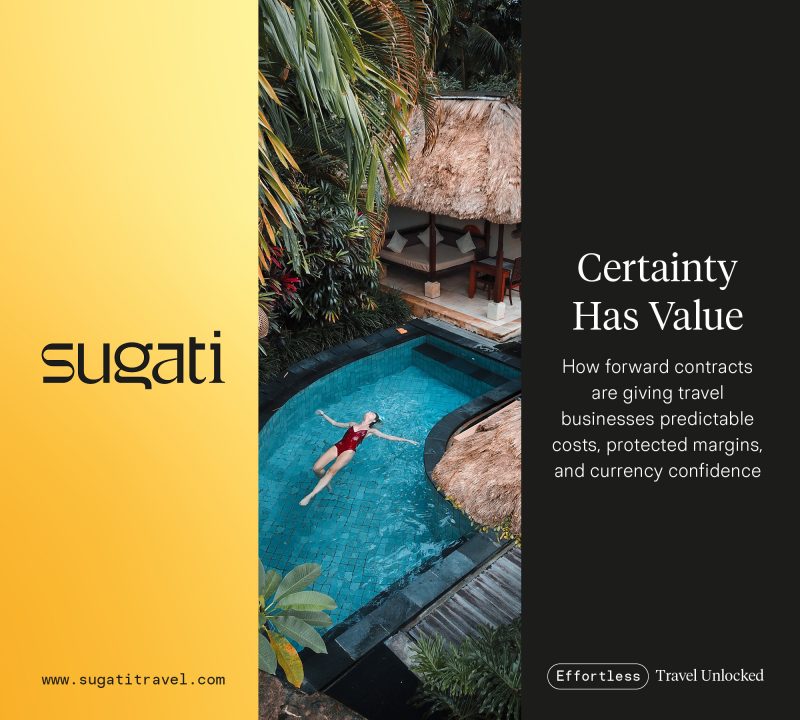
Certainty Has ValueForward Contracts in travel are helping modern travel businesses create greater predictability around supplier payments, currency exposure and projected margins.
Foreign exchange volatility has quietly become one of the most difficult operational pressures facing travel businesses today.

A booking may appear commercially strong at the point of confirmation. Yet by the time suppliers are paid, currency movement alone may have materially altered the profitability of the booking.

For businesses operating internationally, this creates increasing pressure around forecasting confidence.

Particularly in conditions shaped by:

  • wars across Europe and the Middle East
  • political instability
  • inflationary pressure
  • rising operational costs
  • fluctuating exchange markets

For many Finance Directors, visibility around future exposure has become critically important.

What Is Forward Contracts in Travel?

A Forward Contract in travel allows businesses to secure an exchange rate in advance for future supplier payments.

Rather than remaining exposed to future market fluctuations, operators can create greater certainty around upcoming liabilities.

This helps businesses:

    • improve forecasting confidence
    • reduce unexpected margin erosion
    • create stronger financial planning
    • stabilise supplier payment visibility

In uncertain markets, this operational clarity becomes increasingly valuable.

Bringing FX Visibility into Operational Workflows

Historically, foreign exchange management often sat outside operational systems.

Supplier liabilities may exist in one place.
Bookings in another.
FX conversations somewhere else entirely.

As businesses scale, this fragmentation creates increasing operational pressure.

At Sugati Travel, we believe visibility works best when operations, supplier workflows and finance visibility operate together.

Through integrated FX workflows within Sugati, businesses can create earlier understanding around:

    • supplier currency exposure
    • future liabilities
    • projected margins
    • currency movement
    • payment timing

Speak to the Sugati team about integrated FX workflows and Forward Contract visibility within Sugati.

Greater Certainty Supports Calmer Operations

Volatility may not disappear.

But stronger visibility allows businesses to navigate uncertainty more confidently.

Because operational clarity is not only about efficiency.

Sometimes, it is about helping Finance Directors sleep a little better at night.

Social Proof

Operational clarity only matters if it works in real-world conditions.

Read how travel businesses are using Sugati on Salesforce AppExchange to improve visibility, workflow connection and day-to-day operational confidence.

Arrange a conversation with Sugati about Forward Contracts in travel and integrated FX visibility workflows.

Quietly Losing Margin

Why hidden FX exposure and fragmented operations are creating pressure underneath modern multi-currency travel businesses.

Most travel businesses do not suddenly lose profitability overnight.

More often, margin disappears gradually.

Quietly.

A supplier invoice settled at the wrong time.
A currency movement absorbed too late.
A booking that looked commercially healthy becoming less profitable by departure.

For many travel businesses, this pressure is not always visible immediately.

That is precisely what makes it dangerous.

A supplier payment here.
An exchange movement there.
A delayed visibility issue that only becomes apparent months later.

For businesses operating across multiple currencies, financial pressure rarely arrives as a single event. Instead, it accumulates operationally beneath the surface.

This is one of the reasons why FX control for travel companies has become increasingly important.

The Hidden Complexity Behind International Multi-Currency Travel Operations

A booking may involve:

    • EUR hotel contracts
    • USD ground handling
    • Local operational costs
    • GBP customer payments
    • Long lead times between confirmation and supplier settlement

During stable markets, this complexity can remain manageable.

In unstable markets, it becomes harder to predict true profitability with confidence.

Wars, tariffs, inflationary pressure and political uncertainty continue to influence:

    • fuel costs
    • operational pricing
    • exchange rates
    • supplier confidence
    • consumer behaviour

For many travel businesses, spreadsheets are no longer enough.

Visibility Is the Difference Between Reactive and Controlled Operations

The issue is rarely a lack of data.

The issue is fragmented visibility.

When bookings, supplier liabilities and FX exposure sit across disconnected systems, finance teams are forced into reactive operational behaviour.

This is where a connected Travel CRM becomes increasingly valuable.

Not simply as a sales platform.

But as operational infrastructure.

Discover how Sugati Travel CRM helps travel businesses create greater visibility across supplier commitments, operational workflows and FX exposure.

Why Forward Contracts Matter More Than Ever

One of the most effective ways to reduce uncertainty is the ability to use a Forward Contract in travel to protect future supplier payments against currency volatility.

This allows businesses to:

    • secure exchange rates earlier
    • improve forecasting confidence
    • reduce margin uncertainty
    • create calmer operational planning

For Finance Directors, this visibility matters.

Because uncertainty delayed is rarely uncertainty removed.

Social Proof

Operational clarity only matters if it works in real-world conditions.
Read how travel businesses are using Sugati on Salesforce AppExchange to improve visibility, workflow connection and day-to-day operational confidence.

Speak to the Sugati team about integrated FX workflows and Forward Contract visibility within Sugati.

Calm in Uncertain Conditions

Calm in Uncertain ConditionsWars, political instability and currency volatility are reshaping travel margins. Here is how stronger operational visibility helps travel businesses regain control.
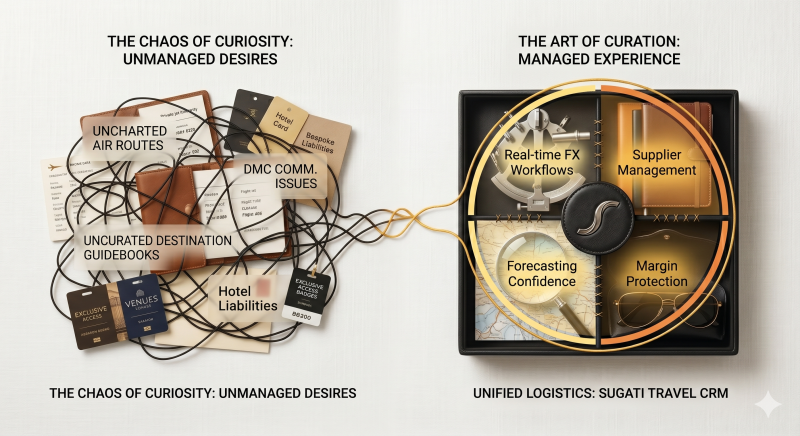


Wars across Europe and the Middle East continue to affect fuel prices, airline routing and consumer confidence. Political instability in the UK has added further pressure to an already fragile economy. Inflation continues to shape supplier pricing globally, whilst currency markets shift faster than many finance teams can comfortably predict.

For travel businesses, these pressures rarely arrive one at a time.

They overlap.

Quietly affecting margins underneath otherwise successful bookings.

A trip may look commercially healthy when confirmed. Yet months later, by the time hotels, ground handlers and suppliers are paid, foreign exchange movement alone may have reshaped the profitability of the booking entirely.

For many Finance Directors, this has become one of the least predictable parts of operating a modern travel business.

Not because demand has disappeared.
But because certainty has.

Margin Is No Longer Controlled by Pricing Alone

In travel, the sale itself is only part of the story.

Between confirmation and departure, there are countless variables sitting underneath a booking:

  • Hotel payments
  • Ground handling costs
  • Transport fluctuations
  • Local operational changes
  • Currency exposure across multiple markets

Even relatively small currency movements can materially impact profitability across an entire season.

Yet many travel businesses still manage FX exposure reactively.

Usually in spreadsheets.
Often across disconnected systems.
Almost always after the pressure has already arrived.

Visibility Is Becoming a Competitive Advantage

Travel finance visibility dashboard showing FX control and supplier payment forecasting for travel companies.

Most operational systems were never designed to give finance teams clear visibility around future exposure.

The booking may sit in one platform.
Supplier liabilities in another.
Currency conversations somewhere inside an email chain.

As businesses scale, fragmentation becomes harder to manage.

Not loudly.
Quietly.

It shows itself in uncertainty around true margins.
In slower decision-making.
In reduced confidence around forecasting.

This is where a modern Travel CRM should begin to do more than simply manage bookings and itineraries.

It should help businesses understand operational reality in real time.

Discover how Sugati Travel CRM helps travel businesses connect operations, supplier management and financial visibility.

Forward Contracts with Sugati

At Sugati Travel, we believe operational clarity should extend into financial visibility.

That includes helping travel businesses gain greater control over foreign exchange exposure.

Through our integrated FX workflows, Sugati customers can structure supplier payments directly through connected FX platforms, allowing businesses to protect exposure earlier in the booking lifecycle.

One of the most valuable tools within this process is the ability to use a Forward Contract in travel to secure an exchange rate in advance for future supplier payments.

In practical terms, this helps create:

    • Greater predictability: around supplier costs
    • Improved visibility: of future liabilities
    • Stronger protection: of projected margins
    • Reduced exposure: to sudden currency movement

More importantly, it helps Finance Directors sleep a little better at night.

Not because volatility disappears.
But because exposure becomes visible earlier.

Speak to the Sugati team about integrated FX workflows and Forward Contract visibility within Sugati.

Greater Visibility Creates Calmer Operations

The travel industry is unlikely to become less stable anytime soon.

Wars, political instability, inflationary pressure and currency fluctuations continue to reshape how travel businesses operate behind the scenes.

The businesses navigating these conditions most confidently are not necessarily avoiding uncertainty altogether.

They are creating earlier visibility around it.

At Sugati Travel, we help travel businesses bring together CRM, supplier operations, finance visibility and FX workflows into one connected operational environment.

Because protecting margin is no longer only about selling well.

It is about understanding exposure before volatility reaches the booking.

Arrange a conversation with Sugati about FX control for travel companies and Forward Contract workflows.

Travel Tech Show: London 2026!

London skyline with sugati logo and TTS details

Bringing Destination Happy to London

At Sugati, we’re driven by the belief that technology should empower people, not replace them. As we prepare for Travel Tech Show London, we invite you to join us in exploring how our solution can bring the “romance” back into your travel business by making the complex feel simple.

We look forward to welcoming both our existing community and those looking for a partner to scale their operations with confidence.

Join us at stand: N39

Stop by to see how we are empowering the future of travel. Sugati is a sophisticated, end-to-end solution tailored for the world’s leading luxury travel brands. Built on decades of industry heritage, our platform unifies every facet of your operations-from intuitive trip designs and complex itinerary building to seamless financial management. Our focus is simple, to streamline your operations so that your business can focus on scaling and customer satisfaction. Engineered for precision and global reach, Sugati simplifies the technical landscape, freeing your team to refocus on the personal touch.

Whether you’re looking to transform your operations or simply want to explore possibilities, we look forward to meeting you at Stand N39 .

Transparent Holiday Pricing: What the CMA Guidance Means for Tour Operators

What the CMA Headline Pricing Guidance Means for Tour Operators

The UK travel industry has reached an important moment.

The CMA Headline Pricing Guidance is changing how holidays must be priced and presented to travellers in the UK. Issued by the Competition and Markets Authority, the guidance aims to eliminate “drip pricing” and ensure travellers understand the full cost of their holiday before making a booking.

At its core,if a traveller must pay a cost in order to take the holiday, that cost should be reflected in the price shown at the outset.

In regulatory terms, this means the Total Holiday Cost becomes the Headline Price.

For tour operators, complying with the CMA Headline Pricing Guidance is not simply a legal exercise. It quickly becomes a question of systems — how to calculate the full cost of a holiday, keep margins intact, and present the result clearly to the traveller.

What the CMA Headline Pricing Guidance Means for Tour Operators

The CMA’s guidance is designed to eliminate what regulators call drip pricing — where unavoidable costs only appear later in the booking process.

Coverage from Travel Weekly has highlighted the urgency of the situation, urging travel businesses to review how holidays are priced and quoted.

Under the new expectations, the headline price of a holiday should include unavoidable charges such as:

  • tourist taxes
  • resort fees
  • destination charges
  • mandatory hotel fees
  • port or airport taxes

Even if those amounts are paid locally and never pass through the tour operator’s accounts.

The guidance also sits alongside the existing Package Travel Regulations (PTRs), reinforcing the broader principle that travellers should be able to understand the full cost of a holiday before making a purchase decision.

For many operators, this represents less of a legal hurdle and more of an operational rethink.

Pricing a Holiday Has Never Been One Number

Anyone who works in tailor-made travel knows that pricing a trip is rarely simple.

Behind every proposal sits a mixture of supplier costs, destination taxes, service margins and local charges. In places like the Maldives or parts of the Caribbean, the local tax rules alone can make consultants perform daily mental gymnastics.

The CMA guidance simply brings those layers into clearer view.

From a practical standpoint, operators now need to manage three distinct pricing views.

Price Type Purpose
Operator Price The amount paid to the tour operator, used for revenue and margin calculations
Mandatory Local Charges Unavoidable charges paid locally by the traveller
Total Holiday Cost The full cost of taking the holiday — this becomes the Headline Price

This structure protects consumers from surprises while still allowing travel businesses to manage their commercial reporting accurately.

The challenge is that many travel teams still try to manage these distinctions manually.

When Pricing Lives in Spreadsheets

For consultants building complex itineraries, pricing can already be the most exhausting part of the job.

Hotels introduce new taxes. Local authorities adjust tourism levies. Resorts add environmental fees. Suddenly the consultant is recalculating figures, checking supplier notes and hoping the proposal still adds up correctly.

The result isn’t just inconvenience — it becomes an operational bottleneck.

Consider a simple scenario.

A £2,000 luxury stay in Dubai shouldn’t suddenly become £2,150 at the check-in desk because tourism dirhams were not clearly reflected in the original quotation.

Moments like that — when a traveller realises the holiday costs more than expected — are exactly what regulators are trying to prevent.

But they also highlight the gap between how holidays are sold and how pricing systems actually work.

Why This Is Really a Technology Question

The CMA guidance doesn’t just introduce regulatory expectations; it quietly exposes the limits of outdated systems.

When pricing data lives across spreadsheets, supplier emails and consultant memory, transparency becomes fragile. Teams rely on experience and caution rather than clear operational structure.

And when consultants are juggling several itineraries at once, mistakes become almost inevitable.

At best, that leads to awkward explanations during the booking process.

At worst, it risks eroding trust or attracting regulatory attention.

This is where a purpose-built Travel CRM begins to bridge the gap.

Where a Travel CRM Makes the Difference

A modern Travel CRM allows pricing data to be structured in the same way trips are actually built.

Mandatory local charges can sit alongside suppliers or destinations.
They can automatically appear when a hotel or activity is added to an itinerary.
And they can be separated from the operator’s own revenue and profit calculations.

The traveller sees a transparent total price.

Meanwhile, the operator’s margins remain clean and accurate.

Just as importantly, consultants no longer need to perform manual calculations every time they build a trip. The system quietly handles the complexity behind the scenes, allowing the team to focus on designing remarkable journeys rather than wrestling with numbers.

The Cost of Ignoring the Shift

While the CMA guidance focuses on consumer protection, the commercial implications are just as important.

If pricing transparency is handled poorly, travel businesses risk:

  • confusing or frustrating clients during the booking process
  • losing trust at the quotation stage
  • damaging their reputation through avoidable surprises

In a competitive travel market, even small moments of friction can influence whether a traveller confirms their booking or continues shopping elsewhere.

Transparency is no longer just regulatory housekeeping. It is becoming a competitive expectation.

Bridging the Gap Between Transparency and Operations

At Sugati, we believe travel companies should spend their time designing exceptional journeys rather than navigating unnecessary operational complexity.

Our Travel CRM for Tour Operators was designed specifically to structure supplier pricing, local taxes and itinerary proposals in one place, helping teams present clear and transparent pricing to travellers.

That includes helping operators:

  • manage supplier pricing in a structured system
  • capture mandatory destination charges alongside core services
  • present compliant headline pricing within proposals and itineraries
  • maintain accurate revenue and margin reporting internally

When pricing logic lives inside the CRM, transparency becomes a natural outcome rather than an additional administrative burden.

The Direction of Travel

The CMA’s Headline Pricing Guidance marks an important step toward greater clarity in how holidays are priced and sold.

But in many ways, it simply reflects something travellers have expected for years: honesty and transparency from the outset.

For travel businesses, the real question is not whether transparent pricing will become the norm.

It already has.

The real question is whether the systems behind the scenes are ready to support it.

Is Your Pricing Workflow Ready for the CMA Headline Pricing Guidance?

Many tour operators in the UK are now reviewing whether their current systems can support the new pricing transparency requirements.

If your team is still relying on spreadsheets or manual calculations, it may be worth reviewing whether your Travel CRM is structured to manage:

  • mandatory local charges
  • supplier-level taxes
  • clear itinerary pricing
  • compliant headline holiday pricing

To help with that process, we’ve created a simple CMA Pricing Readiness Checklist for Tour Operators.

Or, if you prefer a quick conversation, you can book a short pricing workflow review with the Sugati team to see how a structured Travel CRM can remove the manual work from proposals and itineraries.

One Workspace. Complete Confidence.

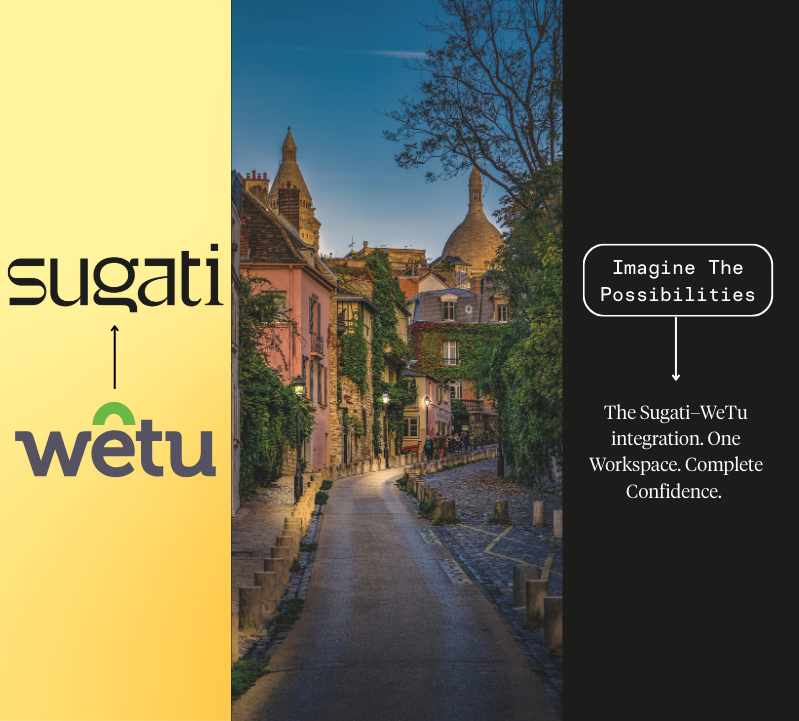
sugati-wetu-integration

The Sugati–Wetu integration for image-rich itineraries without leaving your operational core

In luxury travel, confidence comes from knowing everything sits exactly where it should. The Sugati Wetu integration supports that confidence by bringing operational control and visual content into one connected workspace.

Your pricing stays accurate. Your suppliers remain aligned. As a result, client expectations stay clear — and when it’s time to present a proposal, nothing feels rushed, fragmented or improvised.

However, for many travel teams, this final step still involves switching between systems. Costing lives in one place, while content sits elsewhere. Presentation happens somewhere else again — not because the tools are wrong, but because they were never designed to work together.

The Sugati–Wetu integration: when operations and presentation align

Sugati is designed to act as the operational foundation of a travel business. Pricing logic, margins, client data and supplier detail all live in one Salesforce-native environment built for clarity and control.

WeTu, meanwhile, serves as the global reference point for travel content. Destinations and suppliers keep imagery, descriptions, videos and translations accurate and current.

Until now, these strengths typically sat side by side rather than together. Operational certainty lives in one system, while visual storytelling lived in another. Over time, that separation created friction — subtle, but persistent.

Reducing proposal friction in a content-first travel CRM

When content and costing live in different systems, confidence is always delayed.

The Sugati–Wetu integration removes that separation. Instead of exporting data or linking out to external pages, Sugati pulls WeTu content directly into its itinerary and proposal framework.

As a result, you remain in one workspace while the system handles the connection quietly in the background.

This approach does not add more technology. Instead, it allows each platform to do what it does best, without interrupting how your team works.

How the Sugati–Wetu integration works in practice

The experience remains intentionally simple.

1. Build the structure

Consultants create dates, services, accommodations and pricing directly in Sugati, using the same margin logic and controls they already trust.

2. Surface the content

Sugati identifies relevant properties and experiences, then retrieves the latest approved imagery, descriptions and media from WeTu automatically.

3. Present through your brand

Sugati places that content straight into your templates, applying your layouts, typography and structure.

Nothing duplicates. Nothing reformats. Nothing leaves the system.

The integration is best understood as a single, continuous flow rather than a series of disconnected steps.

Why this integration matters for luxury travel teams

Faster itinerary proposals, without urgency

Proposal creation should feel deliberate rather than compressed.

By removing manual content sourcing and formatting, consultants spend less time assembling and more time refining. As a result, speed improves without introducing pressure — even during peak periods.

You respond quickly because the system stays ready, not because the team rushes.

Always-current travel content, without maintenance

Luxury travel content changes constantly. Properties refurbish. Experiences evolve. Imagery updates.

Because Sugati pulls content live from Wetu, proposals always reflect the most recent supplier-approved material. Consequently, there is no internal library to manage and no risk of outdated visuals reaching clients.

Accuracy becomes expected, not checked.

Brand-controlled proposals inside your travel CRM

When content flows into Sugati, it appears entirely within your brand framework.

Clients receive a cohesive, considered proposal rather than a hand-off to a third-party platform. Fonts, layouts and tone remain consistent, reinforcing trust at every touchpoint.

The technology stays in the background. Your brand stays front and centre.

Personalised itineraries powered by CRM data

Because Sugati holds your client data, content selection happens with context.

For example, family travellers see imagery that reflects shared spaces. Language preferences apply automatically. Destination emphasis adapts based on previous enquiries.

Importantly, this personalisation happens quietly, without adding steps to the process.

A quick check on your current itinerary workflow

If two or more of the points below feel familiar, your proposal process may be working harder than it needs to:

    • Consultants leave the CRM to complete proposals

    • Images live in shared drives or personal folders

    • Proposals require manual formatting before sending

    • Content needs last-minute accuracy checks

These signals point to system design, not team capability.

Bringing content and operational control back together

In luxury travel, presentation matters. However, it should never sit apart from operational truth.

By bringing Wetu’s content depth into Sugati’s operational core, itinerary creation becomes calmer, more consistent and easier to scale. Over time, the experience feels joined-up for your team and seamless for your clients.

Nothing extra to manage.
Nothing new to reconcile.
Just one workspace, doing its job properly.

A considered next step

If you already use Sugati, your account team can show you how the Wetu integration fits naturally into your workflows.

If Wetu already anchors your content strategy, we can demonstrate how it connects into a Salesforce-native operational environment without disruption.

Alternatively, if you are reviewing your technology stack more broadly, this integration shows what a content-first Travel CRM looks like when clarity, confidence and trust guide the design.

Book a considered demo — a short consultation to explore whether Sugati and Wetu fit the way your business works today.

Year 2026 : Clarity, Without Compromise

Why a luxury travel operations platform must reduce friction before it adds intelligence.

As 2026 begins, the priority for luxury travel leaders is no longer radical reinvention. It is certainty. In a market shaped by rising expectations, tighter margins and increasing operational pressure, confidence comes from operating on a luxury travel operations platform that is aligned, resilient and built for control. One end-to-end solution to adapt to the needs of the luxury travel sector.

This post is not about new features or industry noise. Instead, it explores why clarity has become the defining operational advantage in luxury travel—and how platforms that remove friction quietly outperform those that simply add capability.

Integration within a luxury travel operations platform

Luxury travel is built on detail. However, those details often sit across disconnected systems, requiring teams to act as the manual bridge between flights, itineraries, payments and suppliers.

When systems fail to communicate, control is lost incrementally rather than visibly.

Over the past year, Sugati has focused on integrations designed to remove friction without demanding attention. Automated flight logic helps ensure itineraries remain accurate as schedules change, reducing constant manual checks and downstream rework.

At the same time, connected finance workflows have brought payments into the operational core. With XE-powered supplier payments, supported by XE, live FX rates, spot and forward contracts now move in step with the journey itself.

As a result, teams operate with a clearer picture of both operational and financial reality. As 2026 unfolds, this approach continues through a broader set of integrations and platform enhancements—each designed to strengthen alignment without increasing cognitive load.

At this stage, integration is no longer about efficiency.
It is about maintaining control as complexity grows.

A shared operating standard for luxury travel businesses

One of the most meaningful shifts across the last year has been the evolution of Sugati Community.

This is not a marketplace. Rather, it is a deliberately curated operating environment for Tour Operators, Travel Agents and DMCs who share a common standard for delivering luxury holidays.

Across platform usage and collaboration patterns, a familiar set of challenges consistently appears:

  • Travel Agents constrained by systems that slow response times, yet cautious about disruptive migration.

  • DMCs burdened by repeated re-quoting and data duplication across multiple channels.

  • Tour Operators waiting on fragmented supplier information while clients expect immediate, branded responses.

Sugati Community was designed to address this information lag.

By providing a shared technology foundation—while preserving each business’s identity—the Community allows information to flow predictably rather than waiting to be chased. In practice, this has led to material reductions in rework and turnaround time, with a measurable impact on time to booking.

In luxury travel, that difference is decisive.

Operational information designed for modern luxury travel

In 2026, presentation alone no longer defines professionalism. Accuracy does.

Because Sugati Community operates from a single source of truth, operational information can be delivered in the format your client prefers—without fragmentation or duplication.

  • Interactive HTML itineraries support travellers who want to explore their journey dynamically.

  • Branded PDFs retain the reassurance of a traditional luxury format.

  • Real-time synchronisation ensures that one update is reflected everywhere, instantly.

It is not the format that builds trust—it is confidence in the information itself.

AI within luxury travel operations: measured, not noisy

AI will continue to influence the travel landscape. However, in luxury travel, its value depends entirely on how it is applied.

AI is not about replacing judgement. Instead, it reduces the administrative weight that prevents experienced teams from exercising it fully.

Used responsibly, AI can surface patterns, flag inconsistencies and support better decisions at the right moment. By contrast, poorly implemented AI introduces noise, uncertainty and operational distraction.

For this reason, Sugati’s approach remains deliberate. AI is applied only where it strengthens clarity, confidence and control within a luxury travel operations platform, supporting human expertise rather than attempting to replicate it.

What this means for 2026

As the year ahead takes shape, one pattern is becoming increasingly clear:

  • Fragmented systems quietly erode margin and momentum

  • Aligned operations create steadiness, not strain

  • Clarity, not complexity, defines resilience

Through deeper integration, clearer financial workflows and a community of like-minded partners, Sugati continues to support a more considered way forward.

2026 does not reward noise.
It rewards clarity.

Your next step

If your team is losing time to manual bridge work between systems, it may be time to step back and assess where friction is quietly accumulating.

We have developed the 2026 Operational Friction Audit—a practical, 10-point framework shaped by insight from the Sugati community—to help you identify where control, margin and momentum are being diluted.

Request an invite to the Sugati Community
or
Get in touch.

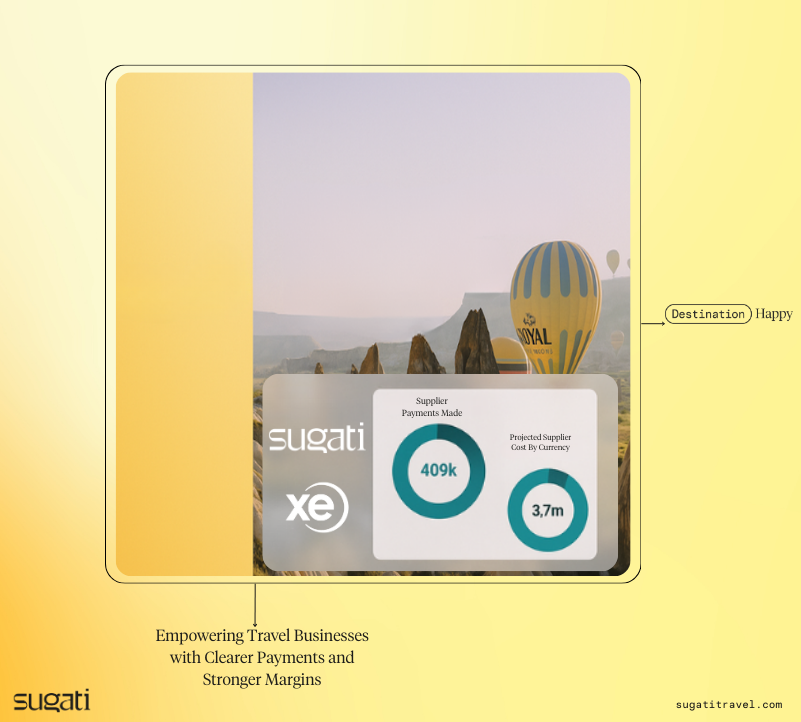
A Season of Giving: Empowering Travel Businesses with Clearer Payments and Stronger Margins

Every festive season gives us a moment to pause, reflect and appreciate the journeys we help create — the remarkable experiences our travellers enjoy, and the partnerships that make them possible. At Sugati, this time of year always inspires us to ask a simple question: how can we bring even more clarity and empowerment to travel supplier payments, a process at the heart of every itinerary you design?

This year, our answer arrives in the form of something powerful — a new capability created to give travel businesses greater confidence, transparency and control. Announced at our Customer Event at the National Gallery, we shared the launch of our partnership with XE.com, a global leader in currency exchange.

Together, we are introducing a seamless way for you to manage travel supplier payments directly within Sugati, supported by XE’s trusted live FX rates. It’s a meaningful upgrade… and a timely gift for the season of giving.

Why Clarity in Travel Supplier Payments Matters More Than Ever

Luxury travel businesses thrive on precision. Every detail matters — from handpicked hotels to curated experiences that feel effortless to the guest. Yet behind the scenes, the financial workflow can be far from straightforward.

Fluctuating exchange rates, slow reconciliations, and hidden losses in the supplier payment process can make margins difficult to measure. We understand how this uncertainty affects planning, profitability, and peace of mind.

So we asked ourselves:

What if travel supplier payments could be as seamless as the journeys you create?

Introducing Direct Supplier Payments Powered by XE

Beginning early next year, Sugati will give you the power to:

Pay suppliers directly through Sugati

All in one place — no switching systems, no broken workflows.

Access XE’s live exchange rates the moment you make a payment

Instant clarity. No surprises.

See real gains and losses on every booking

Sugati automatically calculates FX impact so you can understand your true margin — improving financial reporting, decision-making, and future planning.

Streamline your finance and operations teams

Less manual work. More confidence. More accuracy. More time for creating meaningful travel experiences.

This new supplier payment automation is a reflection of our commitment to transparency, trust and resilience. It brings renewed clarity to one of the most essential processes in your business.

Technology That Connects People, Not Just Numbers

While this is undeniably a data-driven upgrade, its purpose remains deeply human.

It’s about giving your operations team freedom from manual reconciliation.
Giving your finance team the reassurance of accurate, real-time numbers.
Giving your travellers the benefit of a business that flows with elegance and ease.

Because when you run on data you trust, you unlock space to design the unforgettable journeys your clients deserve. That is the power of clarity in travel supplier payments — and the promise behind our partnership with XE.

What Happens Next?

Whether or not you joined us at the Customer Event, we would be delighted to walk you through this new payment capability.

A short demonstration will show you:

  • How supplier payments now flow through Sugati

  • How XE’s rates appear instantly

  • How to view margin clarity at booking level

  • How your teams can reduce hours of manual processing

When you’re ready, we’ll introduce you to the XE team so you can begin setting up the necessary payment arrangements.

This is a moment of discovery and empowerment — a step into the new year with greater transparency, stronger operational resilience and renewed confidence in every number that drives your business.

A season of giving indeed… and a powerful way to start the year ahead.

Sugati at World Travel Market 2025 – Effortless Travel Unlocked

Sugati at World Travel Market 2025

Sugati at World Travel Market 2025

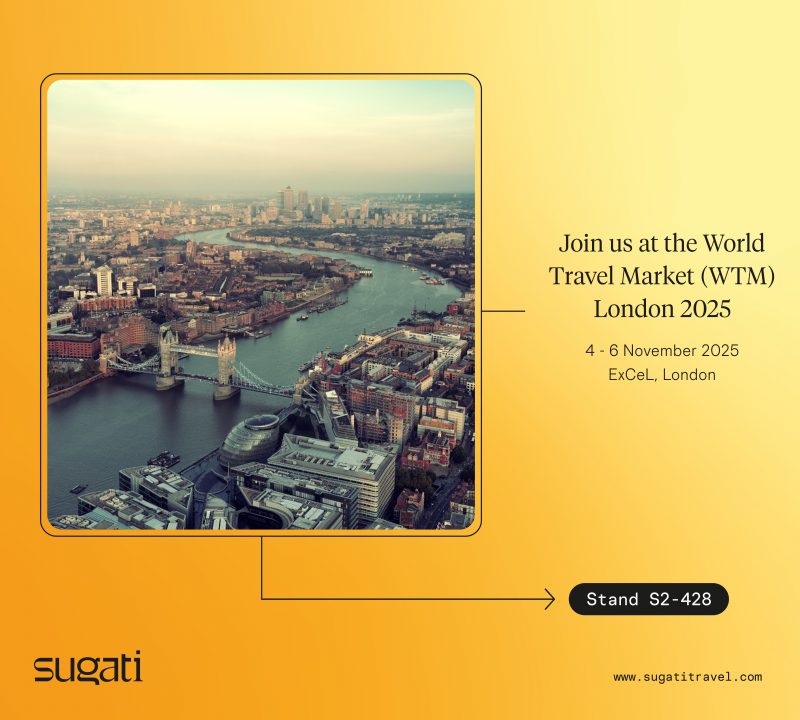
Meet Sugati at Stand S2-428

From 4–6 November, Sugati will be at World Travel Market, London, showcasing how our Salesforce-native travel CRM helps travel companies connect every part of their business — from marketing and sales to operations and finance — in one beautifully simple system.

Sugati empowers travel businesses to plan and manage every stage of the client journey, from first touch to loyal return, while fostering collaboration across teams and partners.

Come and see how technology built for travel can help you deliver high-touch experiences, streamline your workflows, and stay connected with your clients and suppliers.

Join us at Stand S2-428.
Effortless travel Unlocked.

Close